Skip to content
Peter Pielaet-Strayer
Peter Pielaet-Strayer portrait

I design learning experiences across physical and digital environments.

My work focuses on how people move through uncertainty, engage with their environment, and take meaningful action.

I approach it through a combination of structured learning design, real-world experience design, and systems that support reflection and decision-making.

Case Study

Confusion Management Learning System

A structured learning system designed to help students move from confusion to independent action through connected supports, clear process design, and practical implementation tools.

Work

Selected projects

Three layers, one practice: structure that turns complexity into usable learning flows, environments that shape attention and conversation, and systems that support reflection and decision-making over time.
Wine With Pete preview
Experience & Environment DesignAtmosphere, ritual, facilitation
Wine With Pete

Wine With Pete is a gathering-based project that uses food, wine, and conversation to create environments for reflection, connection, and meaningful exchange. Rather than treating learning as something that only happens in formal instruction, the project focuses on how atmosphere, ritual, hospitality, and shared experience shape how people engage, think, and relate. Attention, conversation, and presence are intentionally shaped, allowing for deeper dialogue, perspective, and engagement. Wine is part of the medium, not the central purpose. This is not a wine decision-making tool, not a consumer wine education product, and not primarily about choosing wine.

What it demonstrates

  • Designing learning through environment and atmosphere
  • Structuring open-ended experiences without over-controlling them
  • Using facilitation and context to shape engagement
PMBaseline preview
Learning Systems & PrototypesBaseline across physical + mental states
PMBaseline

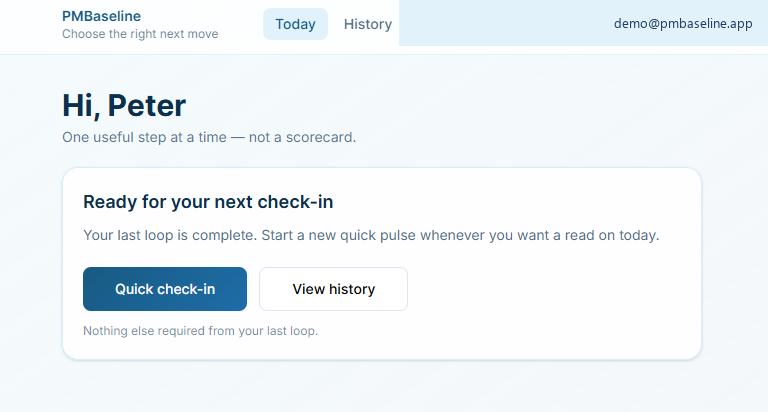
PMBaseline is a system for helping individuals establish and maintain a clear baseline across physical and mental states, and use that awareness to guide action. It uses structure, reflection, and lightweight tracking to reduce overwhelm, improve decision-making, and support consistent progress over time. The focus is making internal state and behavior visible, connecting physical condition, mental state, and daily action. This is not generic productivity, simple journaling, or surface-level self-improvement.

What it demonstrates

  • Translating internal complexity into structured systems
  • Designing for consistency, not just insight
  • Bridging physical state, reflection, and action
MentorHub preview
Learning Systems & PrototypesAutonomy between lessons
MentorHub

MentorHub is a prototype for helping learners continue making progress outside of direct instruction. It focuses on the space between lessons, where learners no longer have guidance but still need to act. The system uses structured prompts, reflection, and lightweight decision frameworks to support independent progress without creating dependency.

What it demonstrates

  • Designing for autonomy and independent action
  • Supporting learners between moments of instruction
  • Structuring reflection into forward movement
Research & Writing

Ideas, Research, and Ongoing Inquiry

Digital friction in learning environments thumbnail
Research Proposal

Digital friction in learning environments

A formal research proposal on how digital tools, interfaces, and workflows introduce friction—points where attention, effort, or meaning break down—and how that friction shapes learning and action. The work connects those patterns to implications for design, not just usability polish.
Writing

Public writing — coming soon

Essays and reflections will be listed here when they’re published. Nothing is linked yet.
Contact

Let’s design your next learning system.

If you want a research-backed structure (with a build plan), send a note. I’ll respond with a clear set of questions and a suggested first prototype.